Category: Watch Guides
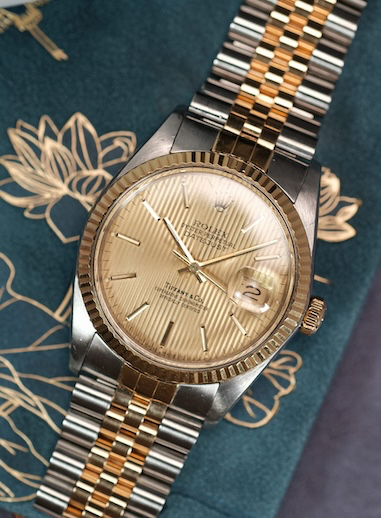
James Cameron Rolex Deep Sea: A Dive Watch That Redefined What’s Possible
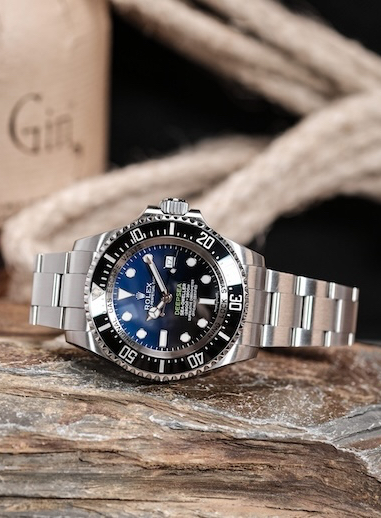
Rolex Submariner Date: A Collector’s Guide
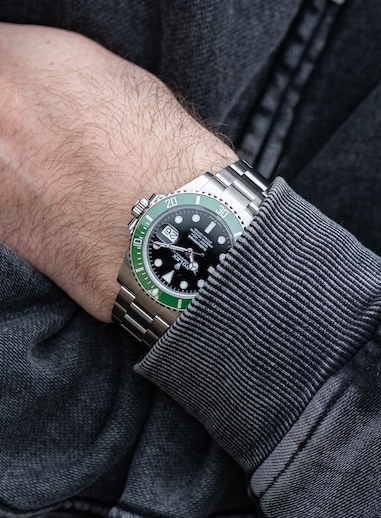
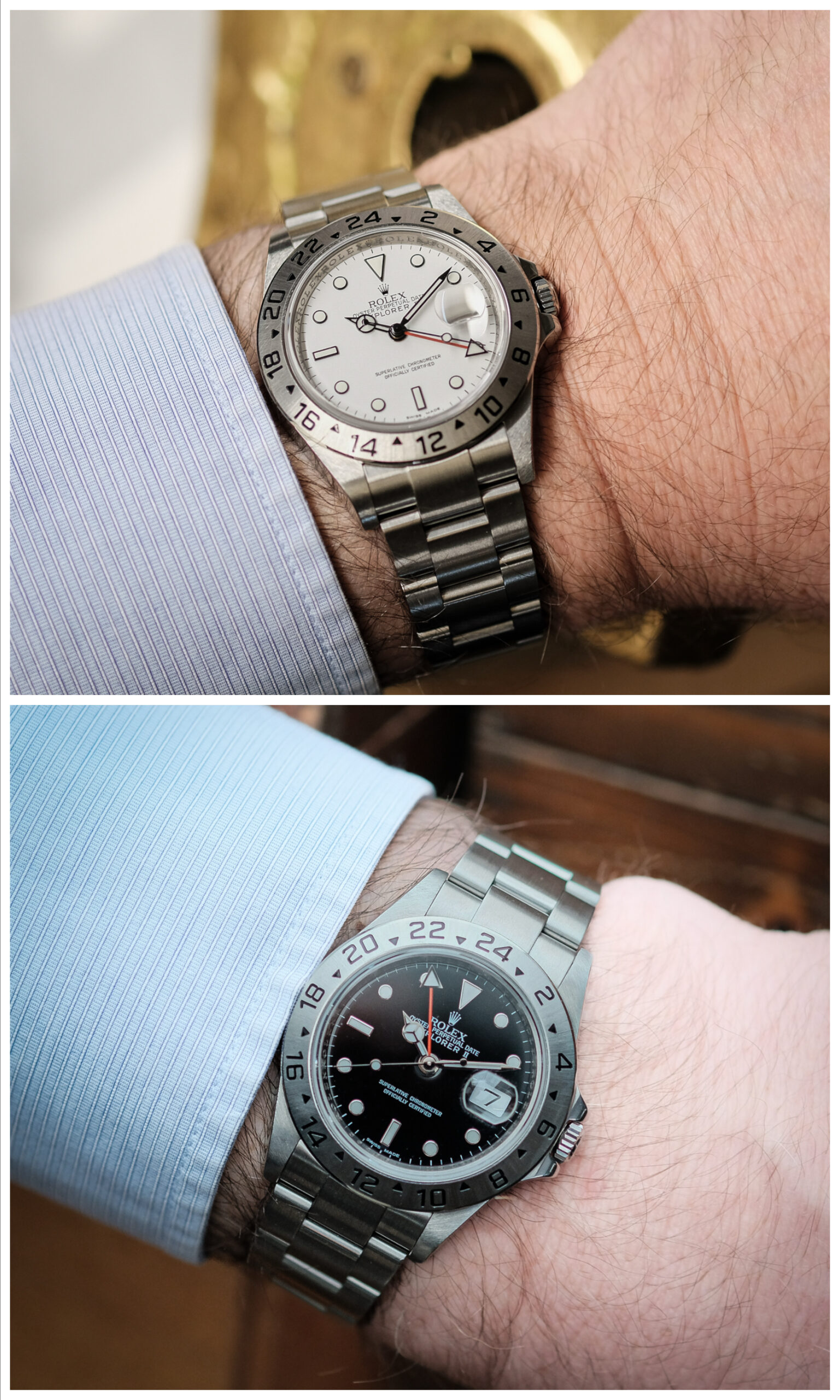
Rolex Explorer II Review: Rolex 16570 Polar ‘v’ Black Dial
Omega Vintage Watches: A Collector’s Dream
How much is my watch worth?
Best Dive Watches – 12 of our Favourites
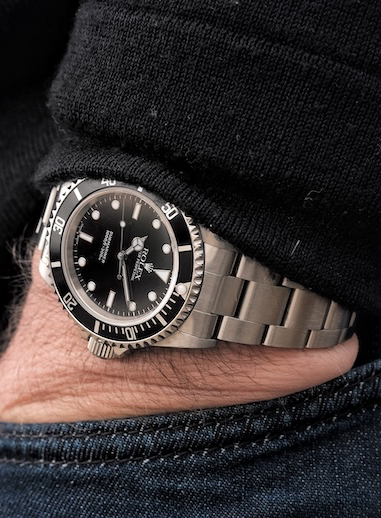
Can I go swimming in a luxury watch?
“Can I go swimming in a luxury watch?”
This is a question that I am often asked by our clients. Of course what they are referring to is whether their watch is water resistant – will it leak and ruin the movement, dial and hands?
There are usually three areas that need to be considered when the water resistance of a watch is under examination;
- the caseback
- the glass
- the crown
During testing, these three components are checked for condition and damage or corrosion. Next the seals fitted between the component and the case are inspected and often replaced. The watch is then pressure tested using a purpose built piece of equipment. When it passes – voila! Your watch is waterproof.
So yes, if it passes the test, you CAN go swimming in a luxury watch. But hang on, there’s another question that needs to be asked ……

“SHOULD I go swimming in a luxury watch?”
All the watches that we sell here at Oakleigh Watches are superb examples of their type and are all of course very valuable.
I can’t imagine a more hostile environment for a luxury watch than a beach with its salt and sand, or a swimming pool full of chlorine, steel and ceramic tiles. And that’s before you even mention the water! So our advice would be – “yes you can swim in a luxury watch but NO, you probably shouldn’t.”
If you’re at the pool or the beach – relax, forget about the time! Or, if you’re like me and feel a bit lost without something stylish on your wrist, switch your luxury time piece for a much more practical G-Shock!
Oakleigh Watches works alongside local Rolex and Omega service agents Michlmayr & Co. All of our luxury pre-owned watches are tested to ensure they are water resistant and comply to COSC spec. Some of our more vintage stock will not be water resistant and this will be made clear in the description.
Understanding Watch Model & Serial Numbers
Being able to read watch serial numbers can be an enormous help when buying a pre-owned luxury watch.
Something I get asked about a lot, mainly – what’s the difference between watch serial numbers and watch model numbers? Where do I find them? How do they date my watch? Usually as a precursor to – how much is my watch worth?
At the end of this article you will find Watch Serial Number Lookup Charts for Rolex & Omega.
Model Number ‘v’ Serial Number
They are two totally different things.
The model number might also be called the ‘reference number’ or ‘style number.’
Unlike the serial numbers that are unique to a watch, model numbers are shared across watches. In the case of Rolex, the model number will tell you which particular collection a watch belongs to and helps identify materials used on a particular Rolex.
Watch Serial Number Check – Why It’s So Important
The watch serial number will tell you the estimated date of production of a watch and help trace authenticity. Therefore when it comes to estimating the value of your watch or buying a pre-owned luxury watch, the serial number is the most important of the two.
Whether you’re trying to value your watch or just interested in its history, it’s always good to check the watch serial number maches the paperwork. In the past, many official watch dealers have given the wrong paperwork with the watch, unaware of the later significance this would have when it comes to value. It’s not until the customer or a family member comes to sell the watch many years later, they realise the dramatic effect this can have on the value of the watch.
A quick watch serial number check can also reveal if it has been stolen, or to autheticate whether is is genuine or counterfeit. If a model was first released in the 1980’s but has a watch serial numbers dating it to the 1970’s, it is very likely a fake.
However, with technology as it is, it is very wasy to fake watch serial numbers and papers. It’s worth doing an internet search as counterfeiters tend to use the same number for whole batches of copies. These may have already been identified as fakes by other watch lovers who have done a watch serial number check and reported it.
For brands such as Omega and Rolex, the serial number is also a way to keep track of a watch. A register of a watch’s service history helps the manufacturer to identify returning problems or indicate parts that might need replacing based on the age of the watch.
What do Model & Serial Numbers look like?
This will vary between brands and for the purpose of this article, we’ve focused mainly on Omega & Rolex.
How do I find the Serial & Model Numbers?
If you have a Full Set, then the serial and model numbers will be on the paperwork – warranty card, certificate of authenticity, service records. If not, your next steps are ……
Rolex Model & Serial Numbers Check
Rolex is unique in that it etches the model and serial numbers between the watch lugs. You will need to remove the bracelet/strap to see it. The model number describes the materials used, the calibre and the type and colour of the bezel. It can be quickly used to find out whether it is an original Rolex or a fake by comparing it with data from trade publications and Rolex catalogues.
It’s easy to get the model number mixed up with the serial number on a Rolex. The model number is generally four, five or six digits long, whereas watch serial numbers can be up to eight digits long. The model number is engraved on the lugs at the 12 o’clock end.
Locating a Rolex Serial Number
If your Rolex was manufactured before 2007, the serial number will be located between the lugs at 6 o’clock (where the bracelet connects to the watch). Between 2008 -2010, Rolex decided to put the serial numbers on the 6 o’clock inner bezel (the thin band between the watch face and the outer casing – see above image)
To complicate things further, Rolex changed the way they produced serial numbers on three different occasions.
- 1927-1987: Every Rolex had a 5-6 digit serial number depending on the year. The higher the number the more recent the Rolex.
- 1987-2010: Rolex introduced a letter for each year which was followed by six digits. For example W00001 would have been the serial number for the first men’s Rolex watch made in 1984. For this brief period, the letter is the most important part, because it tells you approximately when your watch was made.
- 2010: Rolex serial numbers were randomised to eight digit codes. Making it impossible to track and date watches purely on serial numbers. Adding to the increased value of a Full Set!
Keep scrolling for our ‘Watch Serial Number Lookup Charts’ at the bottom of this article.
Omega PIC & Serial Numbers
Omega use serial numbers and refer to their model number as PIC Numbers (Product Identification Code).
The PIC number is used to identify the model, materials, functions and features of each watch. This can be found on the accompanying paperwork. However, Omega has changed systems over the years.
- PIC Pre 1962: Simple alphanumeric code of two letters followed by four digits.
- PIC 1962-2007: They used a Mapics system, consisting of two letters followed by either six or seven numbers.
- PIC 1988: this ran concurrently with Mapics and featured an arrangement of eight numbers in three groups
- PIC Now: PIC14 structure, with 14 digits in six groups.
Luckily, Omega serial numbers are less complicated as they are issued more or less chronologically. Therefore they can be checked against a production chart to get an approximate date of a watch. See our ‘Watch Serial Number Lookup Charts’ at the bottom of this article.
In 1894, Omega started using serial numbers with 1,000,000. Every watch since, has been given a seven or eight digit number, following on sequentially until around 2019, when they hit 99,999,999. However, as always, there are a few exceptions, keep reading.
In 2019, Omega followed the same route as Rolex and started using randomised eight digit numbers, making it near impossible to work out the date of watches without the paperwork.
If your watch doesn’t have the paperwork, don’t despair – you can order an ‘Extract from the Archives’ directly from Omega. This document will also reveal things like which country the watch originated and is a paid service offered by most luxury watch manufacturers.
Locating an Omega Serial Number
Alternatively, you can locate the number on the watch itself. Depending on the age of the watch, the main areas to check are – the movement, inside of the case back, outside of case back and underside of the lugs. From 1990 onwards, Omega watch serial numbers started to be etched onto the lugs or case back.
Much older models might have it engraved on one of the internal movement bridges or elsewhere inside the case back. Again – don’t be tempted to remove the back yourself, ask an expert and avoid damaging your potentially very valuable vintage watch.
I mentioned earlier that there are a few exceptions.
Despite being a fastidious industry, mass production of watches led to movements sometimes being assembled much earlier than the rest of the watch. So a newer model could well have a lower serial number than an older one. This is an industry wide exception, not just Omega.
Omega has been known to vary the position of their serial numbers on the same model type. So not finding a number where you’d expect, doesn’t automatically mean it’s a fake. You will need to check the other main areas as detailed above.
Finally, and a bit of a mystery to all, the Omega Speedmaster range has its own numbering system, refer to the ‘Watch Serial Number Lookup Charts’ below for more information.
Other Luxury Watch Brands & Serial Numbers
They all vary, but as with Omega, the main areas to check are the movement, inside of the case back, outside of case back and underside of the lugs.
In Conclusion
Because of discrepancies in manufacturing, watch serial sumbers should only be used as an approximation. If in doubt – ask an expert – ask us!
“Does this vintage watch have the correct box?”
This is a common question when two people are discussing the purchase of a collectible watch:
Q: “Does this vintage watch have the correct box or is that the correct box for the watch?”
The perhaps impolite but nevertheless accurate response should be :
A: “I’m afraid you’re not asking the correct question and the proper question here is – Could this be the correct box for the watch?”
Then …
The fundamental mistake that we make when considering the boxes and ephemera of vintage watches is to apply today’s quality service standards to watch companies of the 1950s, 60s and 70s.
Nowadays Rolex, Tudor, (TAG) Heuer et cetera are very efficient when it comes to helping their dealers to supply the correct boxes and ephemera with their watches. Unfortunately, forty plus years ago they really weren’t very good at all and would ship the watches separately from boxes, tags, manuals et cetera. This meant that it was the responsibility of the retailer to put the correct package together for the customer and guess what? They weren’t very good at it either.
Picture the scene: it’s January 1972 and a customer has walked into a watch shop to buy a Rolex Submariner – a significant purchase at £270. The jeweller has had this watch in stock for a year and because it took a year from manufacture to get to the jeweller, it’s actually a late 1969 watch.
When the long-haired, flared trouser bedecked salesman brought out the white and green box that was supplied with the watch, his customer was disappointed. He had seen the nice brown one with the seahorse on it in the window and asked if he could have one of those instead please? This man was spending £270 on a watch and the salesman needed to make him happy so of course, he did what the customer asked.
The last thing that the salesman was thinking was that in 40 years time, this watch would be worth £10,000 and having the correct box would matter – and to some, I mean really matter.
Now …
So let’s fast forward those 40 years to a time when a vintage Rolex enthusiast is ready to invest the price of a small car in owning his grail watch, a ‘Red’ Submariner – maybe even a birth year one.
The first question the customer is going to ask is “what year is this watch ” is it 1969 as the serial number suggests or a 1972 as the papers suggest?
The second question the purchaser will ask is are the boxes and ephemera correct? As we know the full story of this particular ‘Red’, you and I are confident that this Full Set is exactly as it was when it left the store. However, our potential purchaser’s eyebrows may have cause to raise.
Surely it can’t be right that a 1969 watch should come in a Seahorse box which wasn’t even released until two years later? But we know differently…
In Conclusion
The moral of this story is that not only is this area of watch purchase a minefield, but also that there are very few absolute certainties and many possibilities.
Some things are clearly impossible and not correct. A watch with a 1975 serial number and papers dated 1973 would be wrong, as would a 1975 watch on a 1985 bracelet, but generally speaking if the differential is up to 2 or 3 years either way with bracelets, papers and ephemera then it’s absolutely fine.
So next time you’re looking at a watch like this, rather than asking “does this vintage watch have the correct box?” ask could this be the correct box for the watch. It will help you appreciate and understand the many possibilities and it may stop you from passing up a fantastic opportunity for the wrong reason.
And finally …
Oh and one final thing, you need to trust the person that you’re buying from.
If you’re considering spending thousands of pounds on a vintage watch from someone who’s opinion and honesty you doubt, then you should really consider buying one elsewhere.
If you would like support or guidance on any of the issues raised in this article then please email us through the website. You might also find our blog – What do we mean by a Full Set, useful reading.